
Small-Space Homesteading: Making a Big Impact With Little Acreage
Homesteading often brings to mind wide-open fields and barns full of animals — but the truth is, you don’t need 10 acres or even one. The heart of homesteading isn’t about the land you own; it’s about the mindset you bring to the space you have. There’s no secret checklist or modern-day “Homestead Act” to qualify you.
Today’s homesteaders come in all forms — from backyard growers to balcony gardeners — each finding simple, sustainable ways to live closer to their food and purpose. This is your permission to start small and still make a big impact.
Step 1: Start Smaller Than You Think (and Grow What You Already Eat)

When we first began, our “garden” wasn’t a series of raised beds — it was a handful of frosting buckets from the bakery at our local grocery store. We drilled drainage holes, filled them with compost, and tucked in a few healthy seedlings. That was it — and that was enough. Starting small gave us space to learn, fail, and adjust without overwhelm.
Choosing seedlings instead of starting from seed was one of our smartest moves. It gave us a head start and spared us from frustrations like poor germination or overwatering. We learned how sunlight shifted, how soil retained moisture, and how quickly pests could appear.
And we grew what we actually ate. It’s tempting to chase new “superfoods,” but if it’s not something your family enjoys, it’ll go to waste. Focus on familiar favorites first; you can experiment later once confidence grows.
Even in a tiny space, there’s always room to grow. Containers, vertical trellises, and compact plant varieties make use of every inch. No yard? Use a balcony. No balcony? Use a sunny window. No sunlight? A small grow light setup will do. The goal is not perfection — it’s progress.
Action Steps:
- Collect free containers (buckets, planters, or pots) and drill drainage holes.
- Fill with compost or soil and choose 3–5 seedlings your family already eats.
- Designate a daily watering time — morning or evening — and stick to it.
- Add a simple trellis or string for vertical crops like beans or tomatoes.
For more beginner growing tips, check out our post on Starting Seeds Indoor.
Step 2: Build a Micro-System That Fits Your Life

Once your plants are thriving, it’s time to create rhythm. A small homestead system functions best when it’s consistent and balanced — short bursts of daily care instead of long exhausting garden days.
Start with a simple routine: daily watering, weekly pruning, light feeding, and regular observation. Over time, you’ll start noticing your plants’ rhythms — when they perk up, when they droop, and when they fruit best. That kind of observation turns chores into connection.
I’ll never forget our first harvest: a handful of cherry tomatoes and a few sprigs of basil. It wasn’t about size — it was the realization that we had fed ourselves from our own hands. That single meal erased every doubt about “not having enough land.” It was proof that small systems can be powerful systems.
Action Steps:
- Water daily at the same time to build routine.
- Feed lightly every 2–3 weeks with compost tea or organic fertilizer.
- Take notes each week on what’s thriving and what’s not.
- Harvest small and often to encourage continuous growth.
Want to track your harvests and garden habits? Download our Free Slow Start Homestead Guide 👇🏼
Step 3: Stop the Waste by Preserving Your Wins

If you’ve ever composted half your harvest because you couldn’t eat it all in time, you’re not alone. We did that for years — one season too little, the next too much. The solution wasn’t expanding our garden; it was learning how to preserve what we already had.
Our first preservation education came from a well-worn copy of the Ball Blue Book of Preserving. That book taught us fundamentals before the age of endless YouTube tutorials. Reliable sources build confidence — and confidence keeps momentum strong. Don’t let internet fear mongering stop you. Learn one preservation method at a time, and practice until it feels second nature.
Freezing, dehydrating, fermenting, and canning each have their place in the small-space homestead. Every method extends your harvest, reduces waste, and helps you eat from your own hands all year long. Opening a jar of home-canned tomatoes in January or spooning fermented peppers over dinner in December will remind you exactly why you started.
Action Steps:
- Choose one crop you frequently overgrow (tomatoes, cucumbers, peppers).
- Pick one preservation method — freezing, fermenting, dehydrating, or canning.
- Start with a small batch — 2 jars or one tray — and label with the date.
- Eat your preserved food within a month to build confidence.
- Expand your preservation skillset each season.
Explore our guides for beginners:
- Canning Basics: Safe Methods & Gear You Need Before Season’s End
- How to Ferment Jalapeños for Beginners
Step 4: Add Animals Only When Your System Is Ready

There’s a popular myth that you need animals to be a “real” homesteader. The truth? Animals are optional. They can be an incredible addition — providing eggs, manure, and natural pest control — but only when you’re ready to care for them properly.
We’ve seen many enthusiastic beginners add chickens or goats before their systems were stable. It almost always leads to burnout, and too often the animals suffer as a result. Feed, shelter, and daily care all require consistent time and resources. If your garden still feels chaotic or you’re short on time, it’s okay to wait.
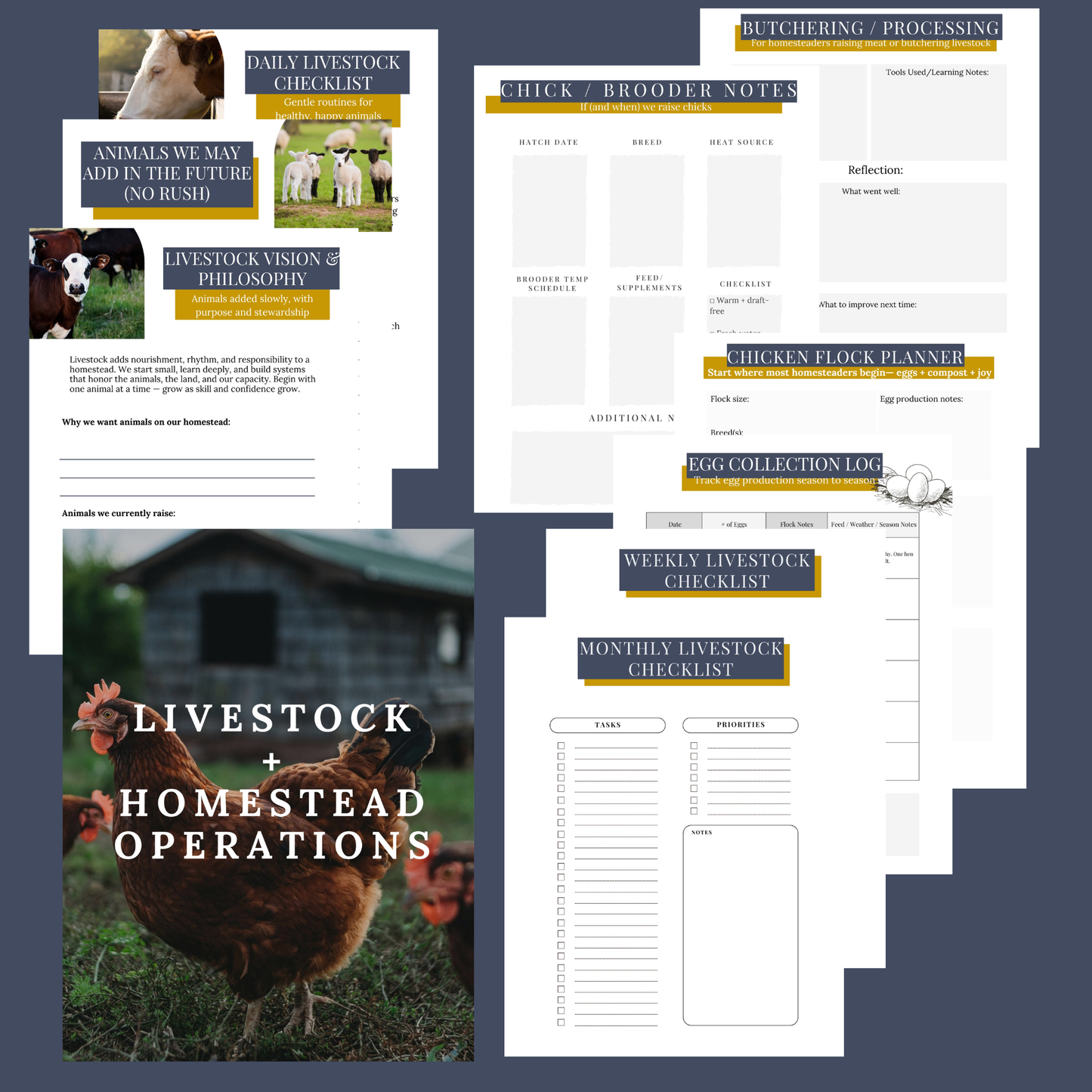
When you do decide to add animals, start small. Chickens are a wonderful entry point, especially in suburban or rural backyards. They provide eggs, soil enrichment, and endless entertainment — but only if they fit into your rhythm. Always ask, “Does this addition make my homestead work better, or harder?”
Action Steps:
- Honestly assess your daily time and seasonal commitments.
- Research care, feed, and housing requirements for one species at a time.
- Visit local farms or 4-H groups to learn firsthand.
- Start with 2–3 chickens or one manageable species. (For a more simple and confident approach check out our Chickens 101 Book.)
- Ensure every animal improves your system’s efficiency, not stress.
For an honest look at homestead pace and purpose, visit our post Real Homesteading: Daily Routine & Reality Check
Step 5: Keep Your Identity — Not a Label

One of the biggest pitfalls in modern homesteading is chasing the look instead of the lifestyle. We’ve met people who focus more on aesthetics than on purpose, forgetting that homesteading is about sustainability, not appearances. For us, the goal has never been to fit the label — it’s to live intentionally and authentically.
Your version of homesteading doesn’t need to look like anyone else’s. It’s about creating a life that supports your values, family, and health. The freedom you gain by living simply and purposefully is worth far more than anyone’s approval.
“Let the world know you as you are, not as you think you should be.”

Homesteading is a lifelong journey of learning, connecting, and refining. Start small, stay steady, and celebrate your milestones. Be yourself; an original is always worth more than a copy.
Action Steps:
- Reflect on what homesteading truly means to you.
- Unfollow content that breeds comparison; follow inspiration instead.
- Celebrate your progress — your first sprout, your first jar, your first egg.
- Revisit your “why” anytime motivation fades.
Until Next Time...